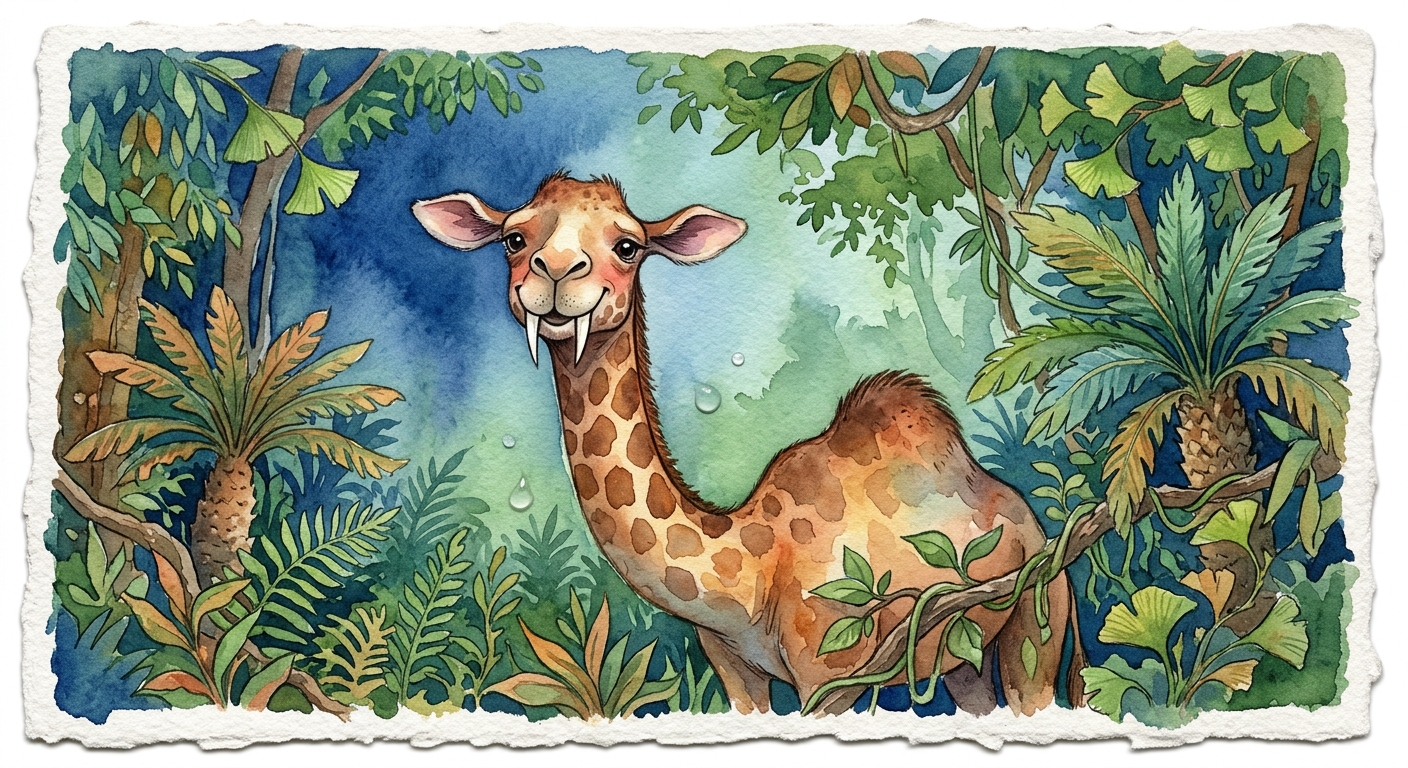
Paleontologists re-examining forgotten bone collections at the American Museum of Natural History have formally identified a remarkable prehistoric creature: Vampyrocamelus welshi, colloquially dubbed the 'vampire camel.' Despite gathering dust in museum cabinets for roughly a century after being excavated by fossil collector Childs Frick, the 13-million-year-old animal has only now been officially described in scientific literature.
Standing on towering, spindly legs with a tall giraffe-like neck, this ancient inhabitant of the North American Great Plains looked like a creature straight out of a fantasy novel. Males of the species featured two pairs of massive, backward-curving upper fangs measuring up to two inches in length. However, despite its menacing facial features, anatomical evidence confirms that Vampyrocamelus was strictly a vegetarian, using its fearsome bite for mating rivalries or self-defense rather than hunting prey.
Researchers believe the creature used its impressive height to browse high canopy foliage that shorter ancient herbivores could not reach. The discovery underscores how vast, unstudied fossil archives in modern museums continue to hold hidden biological marvels, proving that even a peaceful plant-eater can carry the mouth of a nocturnal monster.