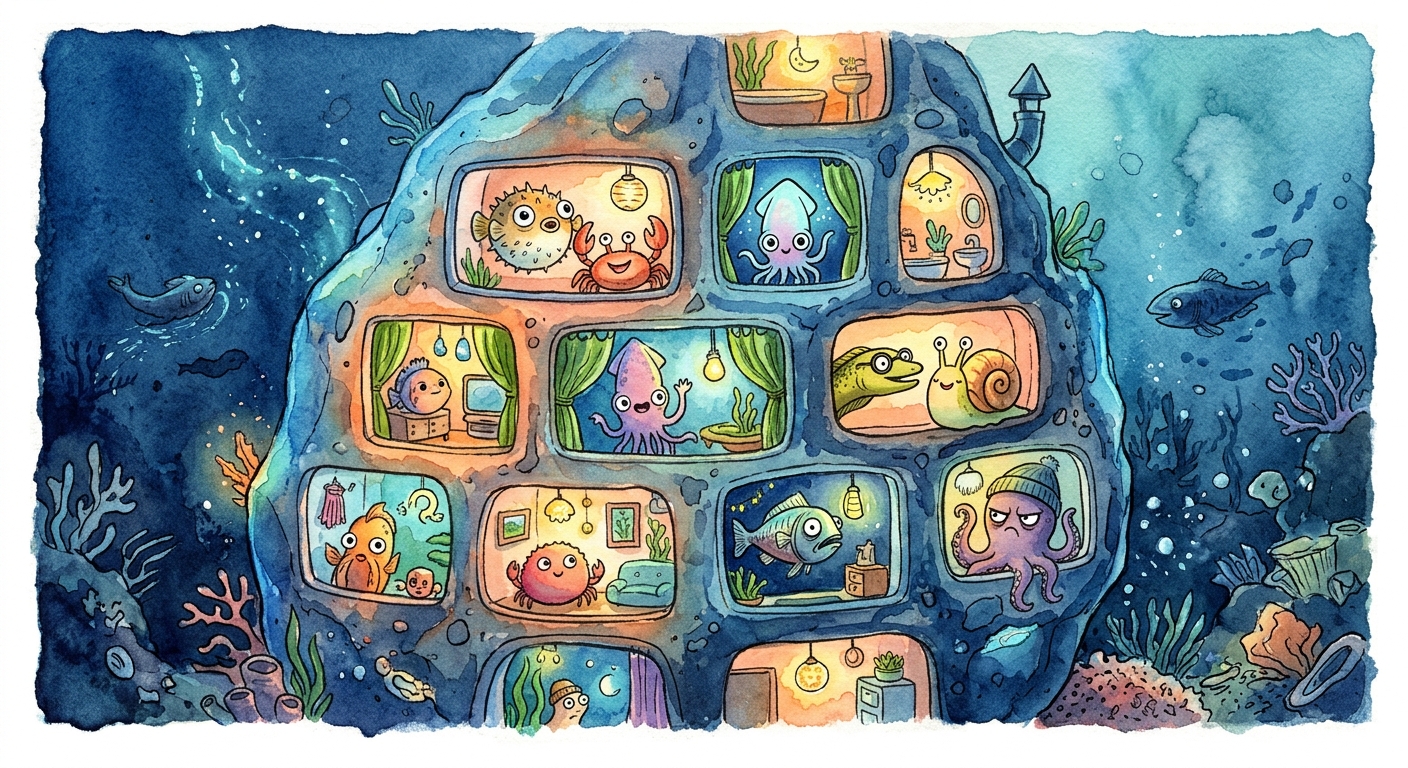
It turns out metropolitan cities aren't the only places dealing with high-density housing. Marine researchers exploring the pitch-black depths of the Pacific Ocean have made a startling discovery: a single metallic rock resting thousands of meters below the surface served as a crowded residential building for 245 individual creatures. The study, led by researchers at the University of Bremen's MARUM Center, examined metal-rich polymetallic nodules that take millions of years to form on the abyssal plain, discovering that these seemingly solid stones are actually bustling micro-habitats.
Scientists inspected 244 of these potato-sized nodules harvested from the Clarion-Clipperton Zone and uncovered a staggering total of more than 4,100 organisms tucked away in microscopic cracks, fissures, and internal cavities. The critters—ranging from delicate marine worms and tiny crustaceans to obscure deep-sea invertebrates—do not merely crawl over the exterior. Genetic testing revealed that the rock-dwelling populations form distinct, specialized communities entirely separate from the animals inhabiting the surrounding muddy seafloor.
Researchers noted that while the exterior of deep-sea nodules was already known to host life, the internal cavernous networks represent an overlooked ecosystem thriving under immense water pressure and total darkness. However, scientists caution that these slow-growing miniature apartment complexes face an uncertain future. As commercial interest in deep-sea mining for battery metals expands, harvesting these mineral-dense rocks could inadvertently destroy entire subterranean neighborly networks that took millennia to establish.