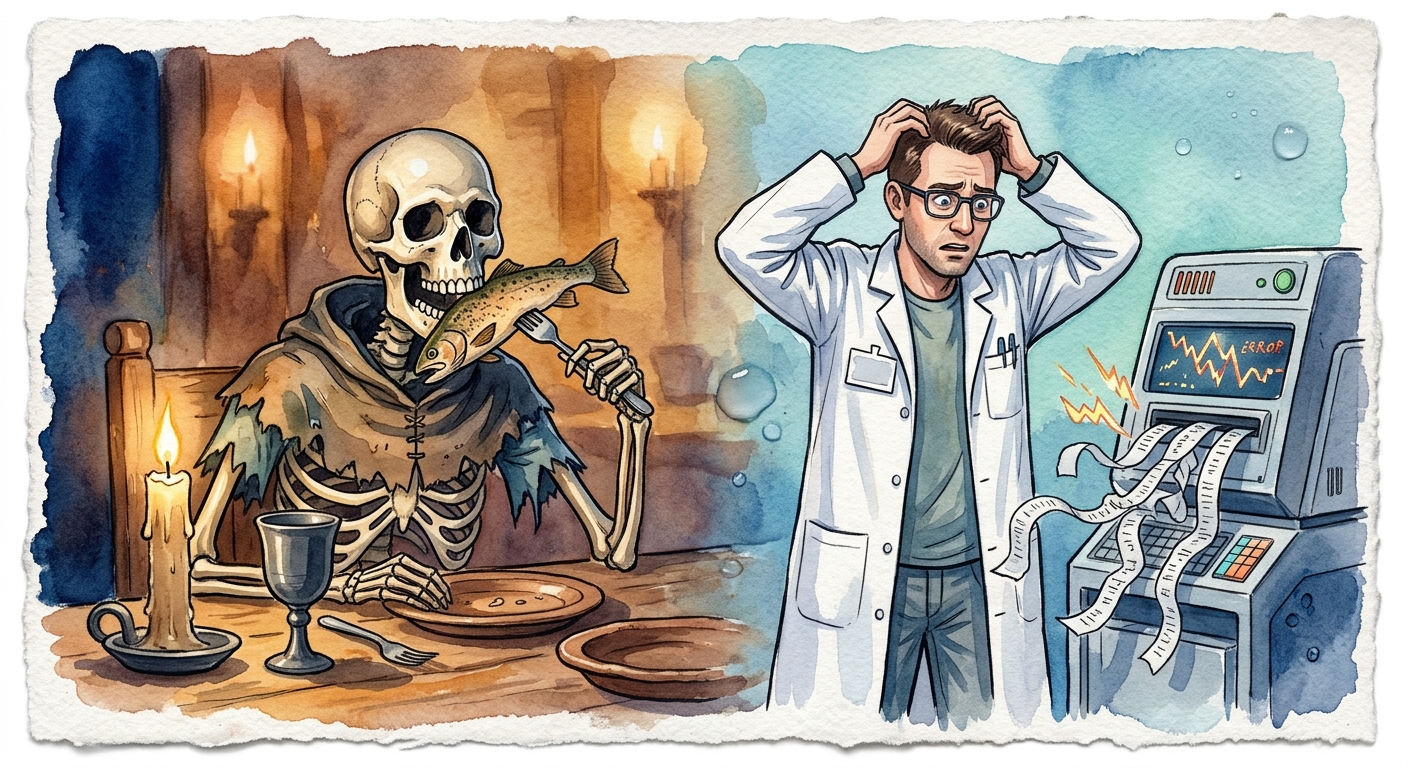
Researchers have uncovered a fascinating flaw in archaeological science that turns historical timelines on their head. A study published in npj Heritage Science reveals that radiocarbon dating—the gold-standard method for determining the age of ancient human remains—can be dramatically thrown off by a seemingly harmless dietary choice: eating freshwater fish. Because lake and river ecosystems contain complex carbon-14 reservoirs, people who consumed significant amounts of freshwater aquatic life end up with chemical signatures in their bones that severely skew age estimates.
The investigation, led by archaeometrist Kaare Lund Rasmussen at the University of Southern Denmark, examined medieval human skeletons buried across Danish monasteries. Researchers discovered that uncorrected carbon dating could distort a skeleton's apparent age by up to a millennium. Ancient lake sediments hold older carbon compounds that aquatic vegetation and fish absorb over time. When medieval monks and villagers feasted on freshwater fish, those depleted carbon isotopes accumulated directly into their skeletal tissues, making their remains appear centuries older than they actually are.
This freshwater reservoir effect creates a major headache for historians and scientists trying to establish accurate historical chronologies across Europe. While marine diets have well-established calibration models, freshwater environments vary wildly from lake to lake, making corrections much trickier. Researchers emphasize that while radiocarbon dating remains an essential tool, scientists will now need to carefully analyze an individual's ancient diet to avoid mistakenly assigning medieval fish lovers to the Dark Ages.