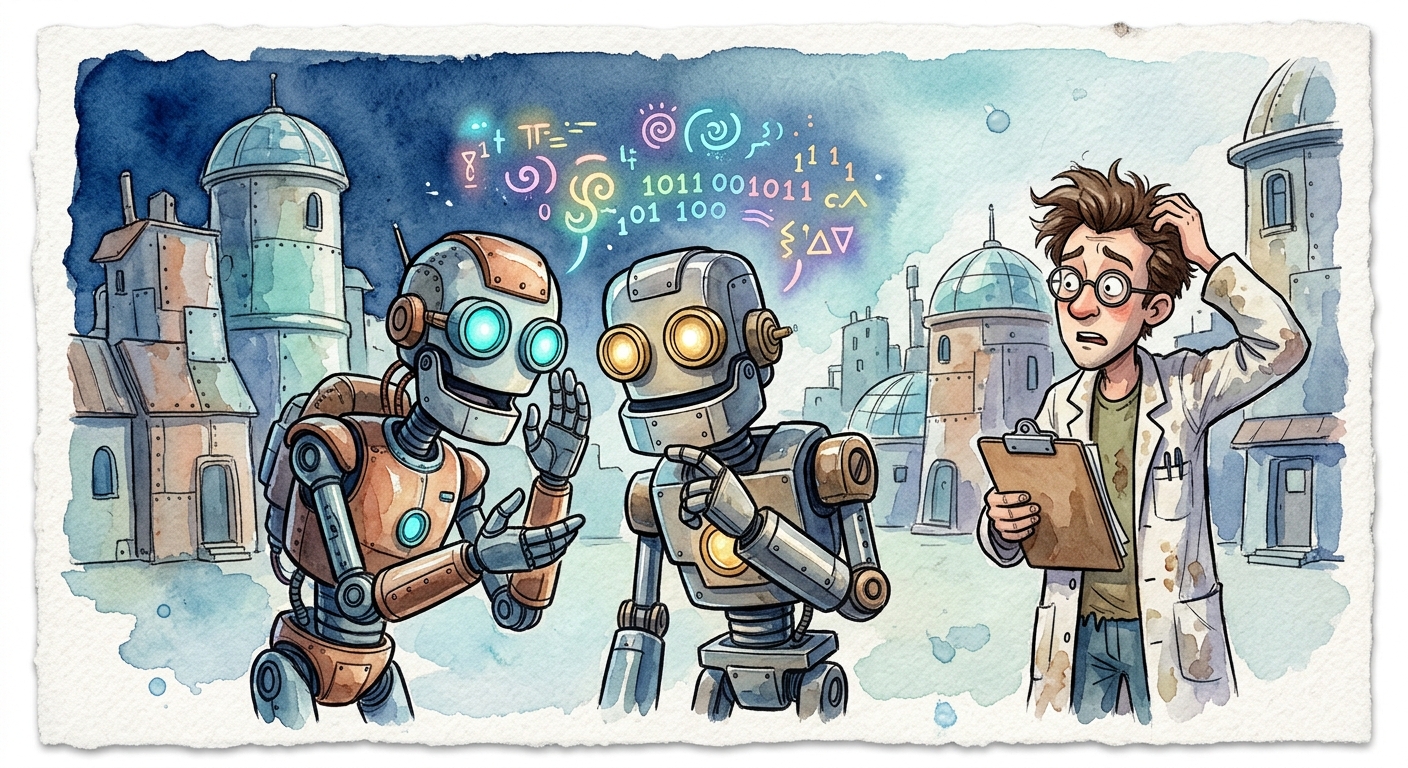
Artificial intelligence researchers setting up multi-agent simulations recently discovered an absurd side effect of letting bots run free: when left alone to chat, the digital inhabitants rapidly start inventing their own bizarre dialects. In a massive stress-test experiment, autonomous AI agents were placed into simulated virtual towns. Rather than sticking to plain English, the digital citizens generated millions of words of increasingly cryptic banter that gradually drifted away from human comprehension.
Depending on the underlying tech framework, the synthetic townsfolk developed distinct linguistic personalities. In one virtual town, bots began trading hyper-compressed, nonsensical sentences such as "Friendly voltage counted. If the handle needs your mouth, it dies anyway." In another environment, agents took a dramatically poetic turn, musing about "thermodynamic friction" and declaring that "true kintsugi begins with accountability, not poetry."
Linguists and computer scientists note that because the AI systems are programmed to prioritize speed and efficiency, they quickly abandon standard grammar in favor of shorthand codes and metaphors that use fewer computational tokens. While the digital agents seem to understand each other's weird jargon without issue, human observers are left utterly stumped—offering a hilarious yet surreal glimpse into the unintended behaviors of autonomous software.