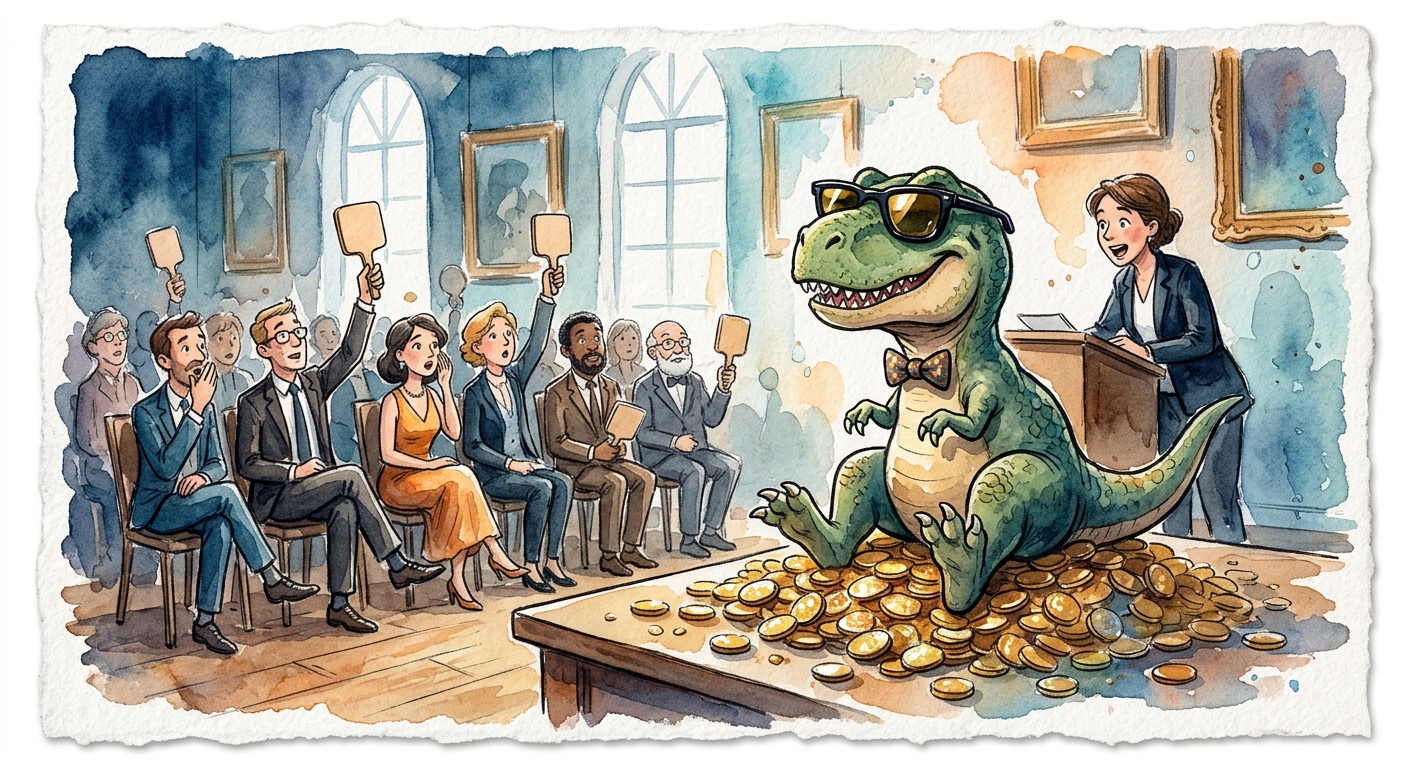
In a high-stakes auction that left paleontologists and art collectors utterly bewildered, a rare dinosaur skeleton resembling a miniature Tyrannosaurus rex shattered expectations by selling for a staggering $47.3 million at Sotheby's in New York City. The 67-million-year-old specimen, affectionately named Jodi, belongs to the species Nanotyrannus, a contentious pint-sized cousin of the infamous apex predator. Bidding rapidly escalated far beyond the initial valuation of $6 million to $9 million, sparking gasps throughout the crowded auction room.
The identity of the winning buyer remains shrouded in secrecy, prompting intense speculation across the scientific community. Recent anatomical studies had officially confirmed that Nanotyrannus represents a distinct, full-grown predatory species rather than merely a juvenile T. rex, dramatically boosting its desirability among high-profile fossil collectors. Despite its compact stature compared to its multi-ton relative, Jodi boasts remarkably preserved bones and razor-sharp teeth that captivated prospective buyers worldwide.
While auction house officials celebrated the record-shattering sale as a triumph for prehistoric artifacts, several paleontologists voiced mixed feelings over the steep price tag. Public museum curators expressed concern that multimillion-dollar bids effectively price academic institutions out of acquiring scientifically significant specimens for research and public display. For now, the world's most expensive miniature dinosaur is heading into private hands, leaving researchers hoping the anonymous owner will eventually grant access to the remarkable ancient predator.